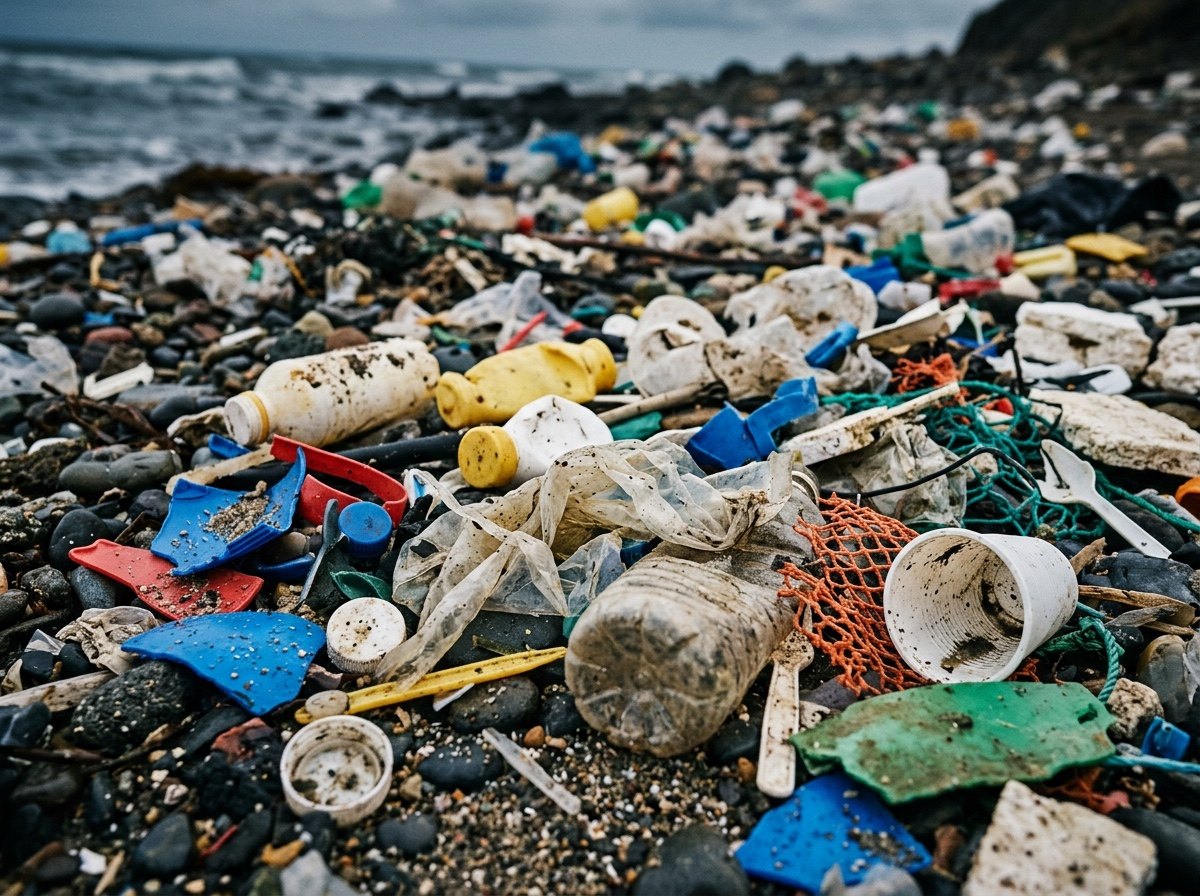
Plastics are everywhere in the modern home: food packaging and containers, kitchen utensils, flooring, furniture, toys and personal care products. The main health concern is less the plastic itself than the chemicals added to it, particularly phthalates, which make plastics soft and are used in fragrances, and bisphenols such as BPA, used in some hard plastics and can linings. These chemicals can move out of products into food, air, household dust and skin. Increasingly, researchers are also looking at the tiny plastic particles themselves: microplastics and nanoplastics.
Health effects of phthalates, BPA and microplastics
Hormone disruption. The Endocrine Society has concluded that endocrine-disrupting chemicals, including bisphenols and phthalates, can affect health, and that exposure during development is of particular concern 1.
Reproductive health. A systematic review of human studies found robust evidence linking two common phthalates, DEHP and DBP, with male reproductive outcomes including semen quality and testosterone levels 2.
Heart and mortality. In a nationally representative US cohort of more than 5,000 adults, higher levels of phthalates, especially DEHP, were associated with higher all-cause and cardiovascular mortality 3. In another study, microplastics were found in the neck artery plaque of 58 per cent of patients having surgery, and those patients had a higher risk of heart attack, stroke or death over the following three years or so 4. Both are observational studies, so they show an association, not proof of cause.
The bigger picture. An international commission concluded that plastics cause harm to human health at every stage of their life cycle, from production to disposal 5.
At home. Household dust consistently contains phthalates and other chemicals from consumer products 6. In laboratory tests, microwaving food in plastic containers released far more micro and nanoplastic particles than refrigeration or room-temperature storage 7.
The PERTH Trial: reducing plastic exposure in Australia
The Plastic Exposure Reduction Transforms Health (PERTH) Trial is an Australian study led by Clinical Professor Michaela Lucas at the University of Western Australia and funded by the Minderoo Foundation 8. Its first results were published in Nature Medicine in 2026 9.
In the first phase, researchers measured plastic chemicals in 211 adults in Perth. Highly processed, plastic-packaged and canned foods stood out as important factors that people could change.
In the second phase, 60 participants took part in a seven-day randomised trial. Intervention groups received combinations of plastic-free kitchenware, low-plastic personal care products, and food sourced from more than 100 producers so that it had minimal contact with plastic from paddock to plate. Compared with the control group, urinary levels of two phthalates fell by 37.5 and 53.5 per cent, and BPA fell by 59.7 per cent. Food with minimal plastic contact had the broadest effect, and switching personal care products alone also reduced one phthalate 9.
These findings fit with an earlier US study, in which three days of fresh food that was not canned or packaged in plastic reduced BPA levels by 66 per cent and DEHP levels by more than half 10.
What the trial does not yet show is whether lower levels improve health. A four-week trial in adults with cardiometabolic risk factors is designed to test exactly that 11, and further work is looking at reproductive health 8.
How to reduce plastic exposure at home
The encouraging message from PERTH is that exposure can fall within days. A few changes cover most of the ground:
- Don’t heat food or drinks in plastic. Use glass, ceramic or stainless steel.
- Store food in glass or stainless steel, and choose fresh food over plastic-packaged, canned and highly processed food where you can.
- Use wooden or stainless steel kitchen utensils and boards.
- Choose fewer, fragrance-free personal care and cleaning products.
- Keep dust down: damp-dust, use a vacuum with a HEPA filter, and ventilate.
Children are worth particular attention, because they are still developing and spend more time close to the floor, where dust settles. We look at plastics and product chemicals as part of our Materials assessments, including in childcare centres.
None of this needs to be perfect. The aim is to lower exposure where it is easiest, and to keep watching the evidence as trials like PERTH report on health outcomes.
References
- Gore AC, Chappell VA, Fenton SE, et al. EDC-2: The Endocrine Society's second scientific statement on endocrine-disrupting chemicals. Endocr Rev. 2015;36(6):E1-E150. doi.org/10.1210/er.2015-1010 · PubMed 26544531
- Radke EG, Braun JM, Meeker JD, Cooper GS. Phthalate exposure and male reproductive outcomes: a systematic review of the human epidemiological evidence. Environ Int. 2018;121(Pt 1):764-793. doi.org/10.1016/j.envint.2018.07.029 · PubMed 30336412
- Trasande L, Liu B, Bao W. Phthalates and attributable mortality: a population-based longitudinal cohort study and cost analysis. Environ Pollut. 2022;292(Pt A):118021. doi.org/10.1016/j.envpol.2021.118021 · PubMed 34654571
- Marfella R, Prattichizzo F, Sardu C, et al. Microplastics and nanoplastics in atheromas and cardiovascular events. N Engl J Med. 2024;390(10):900-910. doi.org/10.1056/NEJMoa2309822 · PubMed 38446676
- Landrigan PJ, Raps H, Cropper M, et al. The Minderoo-Monaco Commission on Plastics and Human Health. Ann Glob Health. 2023;89(1):23. doi.org/10.5334/aogh.4056 · PubMed 36969097
- Mitro SD, Dodson RE, Singla V, et al. Consumer product chemicals in indoor dust: a quantitative meta-analysis of U.S. studies. Environ Sci Technol. 2016;50(19):10661-10672. doi.org/10.1021/acs.est.6b02023 · PubMed 27623734
- Hussain KA, Romanova S, Okur I, et al. Assessing the release of microplastics and nanoplastics from plastic containers and reusable food pouches: implications for human health. Environ Sci Technol. 2023;57(26):9782-9792. doi.org/10.1021/acs.est.3c01942 · PubMed 37343248
- The University of Western Australia. The PERTH Trial: Plastic Exposure Reduction Transforms Health. Accessed September 2026. www.uwa.edu.au/the-perth-trial
- Harray AJ, Lucas AD, Herrmann SE, et al. Low-plastic diet and urinary levels of plastic-associated phthalates and bisphenols: the randomized controlled PERTH Trial. Nat Med. 2026;32(5):1871-1883. doi.org/10.1038/s41591-026-04324-7 · PubMed 42014506
- Rudel RA, Gray JM, Engel CL, et al. Food packaging and bisphenol A and bis(2-ethyhexyl) phthalate exposure: findings from a dietary intervention. [Title as published.] Environ Health Perspect. 2011;119(7):914-20. doi.org/10.1289/ehp.1003170 · PubMed 21450549
- Lucas A, Harray A, Duong L, et al. Randomised controlled trial of a low plastic diet and lifestyle intervention for adults with cardiometabolic risk factors: the Plastic Exposure Reduction Transforms Health (PERTH) trial - a protocol. BMJ Open. 2025;15(8):e099330. doi.org/10.1136/bmjopen-2025-099330 · PubMed 40854835