Science · Beyond the core
Ageing in place & longevity
A home that keeps working as you age.
Most people want to stay in their own home for as long as possible. Lighting, layout, temperature and safety decide how realistic that is.
Why it matters
Ageing changes what a home needs to provide. Eyes need more light and are more sensitive to glare, balance and strength change, and the body copes less well with heat and cold. Planning for this early is cheaper and less disruptive than adapting in a hurry after a fall or a hospital stay. We use the word longevity in this practical sense: a home that supports health and independence for longer, not a promise to slow ageing.
What the research shows
Home safety changes reduce falls. A Cochrane review of 159 trials found that home safety assessment and modification reduced both the rate of falls and the risk of falling in older people living in the community. These interventions were more effective in people at higher risk, including those with severe visual impairment, and when delivered by an occupational therapist 1.
Older eyes need more light. Age-related changes in the lens and pupil substantially reduce the light reaching the light-sensitive cells that set the body clock 2.
Lighting can support sleep in care settings. In a small study in nursing homes, lighting designed to deliver more circadian stimulation during the day improved sleep and reduced depression and agitation scores in residents living with dementia. The authors called for larger trials 3.
Temperature matters more with age. Cold contributes more to temperature-related deaths than heat 4, and older adults' sleep worsens as bedrooms get hotter 5.
What can be done
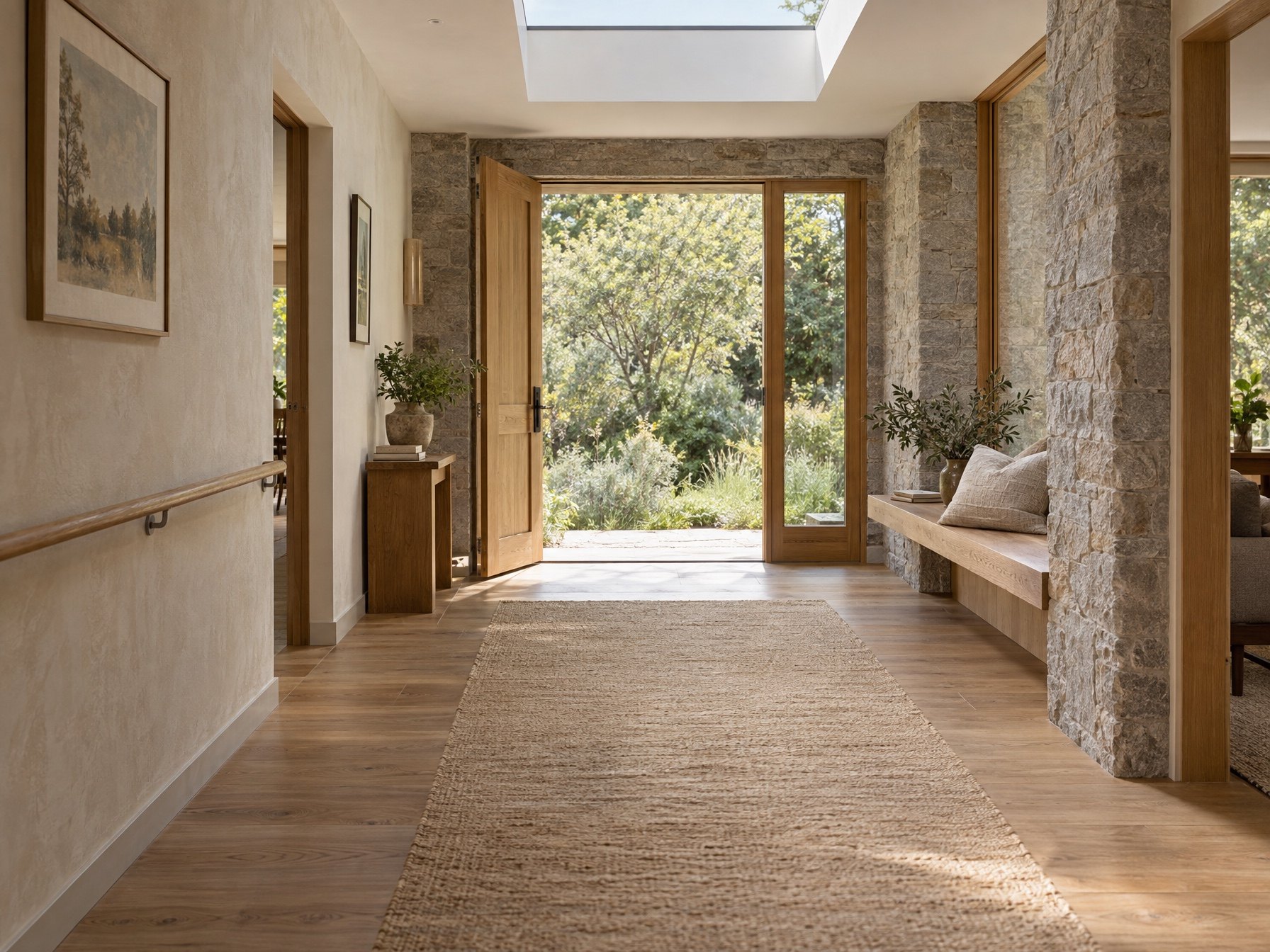
Brighter, even lighting with less glare; lit night-time paths to the bathroom; clear visual contrast at steps and edges; grab rails and step-free access where needed; reliable heating and cooling; and quiet bedrooms. For people with higher falls risk we recommend working with an occupational therapist, and we coordinate with them rather than replace them.
How we assess it
We measure light levels and glare along everyday routes, review stairs, bathrooms and entries, log temperatures in living areas and bedrooms, and plan changes in stages so a home can adapt over time.
Evidence at a glance
- Well supported
Home safety assessment and modification reduces falls, especially in higher-risk people. 1
- Reasonable
Lighting designed around the body clock for older adults and people living with dementia. Promising, based on small studies. 3
General information only, not medical advice. How we grade evidence.
References
- Gillespie LD, Robertson MC, Gillespie WJ, et al. Interventions for preventing falls in older people living in the community. Cochrane Database Syst Rev. 2012;(9):CD007146. doi.org/10.1002/14651858.CD007146.pub3 · PubMed 22972103
- Turner PL, Mainster MA. Circadian photoreception: ageing and the eye's important role in systemic health. Br J Ophthalmol. 2008;92(11):1439-44. doi.org/10.1136/bjo.2008.141747 · PubMed 18757473
- Figueiro MG, Plitnick BA, Lok A, et al. Tailored lighting intervention improves measures of sleep, depression, and agitation in persons with Alzheimer's disease and related dementia living in long-term care facilities. Clin Interv Aging. 2014;9:1527-37. doi.org/10.2147/CIA.S68557 · PubMed 25246779
- Gasparrini A, Guo Y, Hashizume M, et al. Mortality risk attributable to high and low ambient temperature: a multicountry observational study. Lancet. 2015;386(9991):369-75. doi.org/10.1016/S0140-6736(14)62114-0 · PubMed 26003380
- Baniassadi A, Manor B, Yu W, Travison T, Lipsitz L. Nighttime ambient temperature and sleep in community-dwelling older adults. Sci Total Environ. 2023;899:165623. doi.org/10.1016/j.scitotenv.2023.165623 · PubMed 37474050