Science · Beyond the core
Biophilic design
Nature, brought indoors with care.
Views, daylight, plants and natural materials make spaces feel better to be in. Some of the popular claims hold up. Others do not.
Why it matters
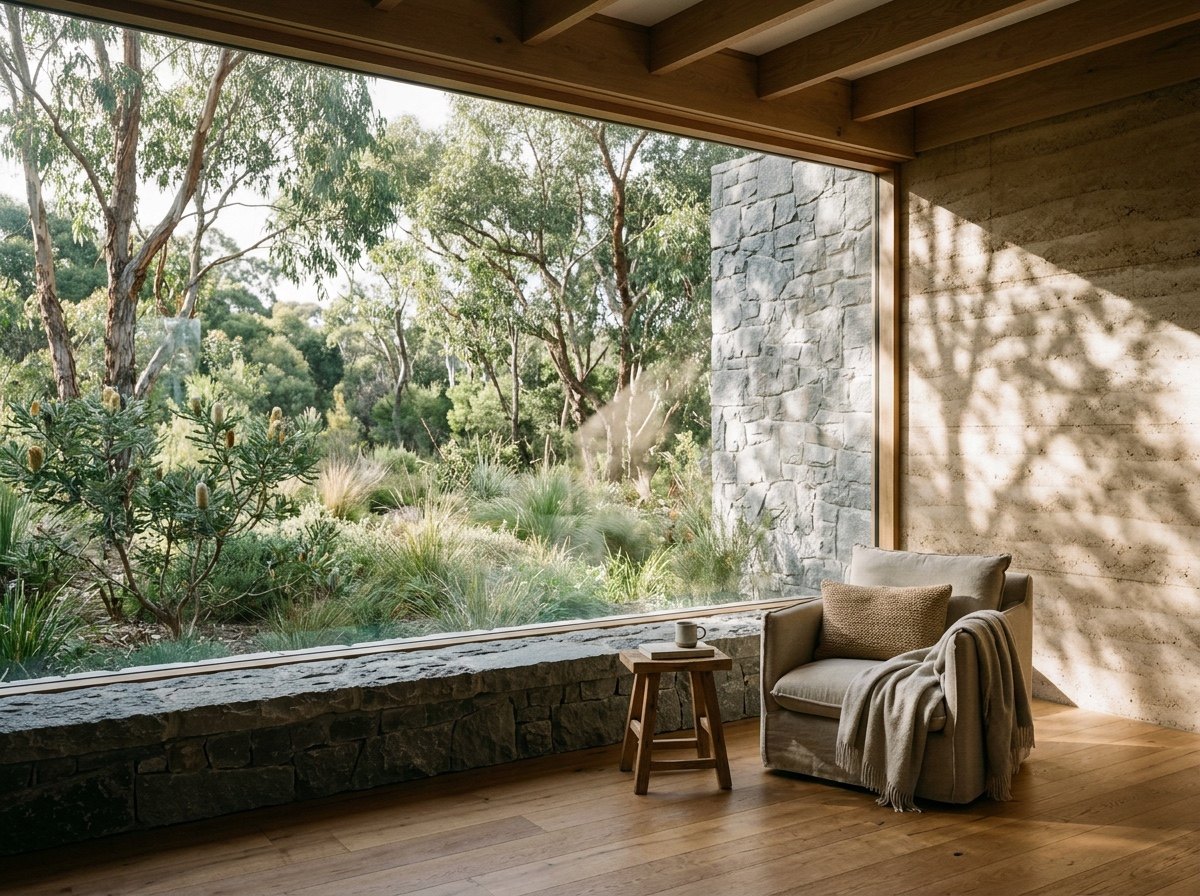
Biophilic design means designing buildings so the people inside stay connected to nature: views outside, daylight, natural materials, plants, water and outdoor space. The appeal is intuitive. The evidence is mixed, so it is worth being precise about what it can and cannot do.
What the research shows
Views of nature. In a well-known 1984 study, hospital patients whose windows looked onto trees had shorter post-operative stays and needed fewer strong painkillers than matched patients whose windows faced a brick wall. It was a small study of 46 patients, but it has been influential in hospital design 1.
Green space. A systematic review and meta-analysis found that greater exposure to green space was associated with lower stress hormone levels, heart rate and blood pressure, and lower rates of type 2 diabetes and death. Most studies were observational and of variable quality, and they concern outdoor green space rather than indoor design 2.
Plants at work. Three field experiments in commercial offices found that adding plants improved workers' perceptions of air quality, concentration and satisfaction, and measures of productivity 3.
Plants do not clean the air. Laboratory claims that houseplants remove pollutants do not translate to real rooms. A review of the evidence estimated that a building would need between 10 and 1,000 plants per square metre of floor to match the removal already provided by normal ventilation 4.
What can be done
Prioritise views and daylight from the places people spend the most time. Use natural materials that also perform well for emissions and durability. Include plants for how they make a space feel, not for air cleaning. Make outdoor space easy to get to and use.
How we assess it
We review daylight and outlook from key positions, access to outdoor space, and materials, and fold biophilic recommendations into lighting, air and materials advice rather than treating them as decoration.
Evidence at a glance
- Reasonable
Nature views and plants improve how spaces feel and may support wellbeing and performance. 1,3
- Not supported
Houseplants as a way to clean indoor air. 4
General information only, not medical advice. How we grade evidence.
References
- Ulrich RS. View through a window may influence recovery from surgery. Science. 1984;224(4647):420-1. doi.org/10.1126/science.6143402 · PubMed 6143402
- Twohig-Bennett C, Jones A. The health benefits of the great outdoors: a systematic review and meta-analysis of greenspace exposure and health outcomes. Environ Res. 2018;166:628-637. doi.org/10.1016/j.envres.2018.06.030 · PubMed 29982151
- Nieuwenhuis M, Knight C, Postmes T, Haslam SA. The relative benefits of green versus lean office space: three field experiments. J Exp Psychol Appl. 2014;20(3):199-214. doi.org/10.1037/xap0000024 · PubMed 25068481
- Cummings BE, Waring MS. Potted plants do not improve indoor air quality: a review and analysis of reported VOC removal efficiencies. J Expo Sci Environ Epidemiol. 2020;30(2):253-261. doi.org/10.1038/s41370-019-0175-9 · PubMed 31695112